
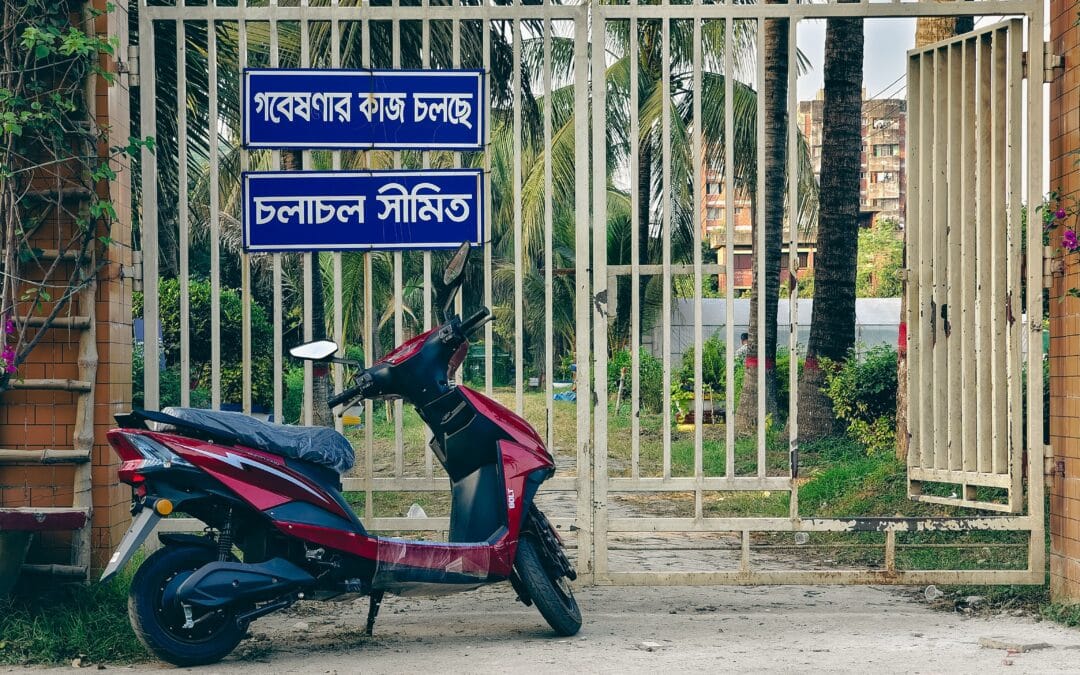
Why Electric Two-Wheelers in India Are Driving the EV Market Growth
When many people think about electric vehicles (EVs), they picture electric cars. In countries like the United States and much of Europe, electric cars receive most of the attention because they are replacing traditional passenger vehicles.
India's transportation system is different. Two-wheelers—including motorcycles and scooters—make up the largest share of vehicles on the road and are used every day for commuting, deliveries, small businesses, and personal travel. Because of this, the country's transition to electric mobility is being led by electric scooters and motorcycles rather than electric cars. (Source: IEA – Global EV Outlook 2024)
This difference is important. India has one of the world's largest populations of two-wheelers, making the electrification of this segment one of the biggest opportunities to reduce fuel consumption, improve air quality, and lower greenhouse gas emissions from road transport. (Source: IEA – Global EV Outlook 2024)
Road transport accounts for a significant share of India's energy-related carbon dioxide (CO₂) emissions. As travel demand continues to grow, electric two-wheelers are expected to play an increasingly important role in reducing fuel use and emissions because they are among the easiest vehicle types to electrify. (Source: IEA – Transitioning India's Road Transport Sector)
For many Indian households, choosing an electric scooter is not only an environmental decision. It is also a financial decision that is accelerating Electric Scooter Adoption across India. Electric two-wheelers generally cost less to operate than petrol models because electricity is cheaper than petrol on a per-kilometre basis, and electric motors require fewer moving parts to maintain. As battery prices have fallen and government incentive programs have expanded, electric scooters have become a practical option for commuters and delivery riders across the country. (Sources: IEA; World Bank)
Why Electric Two-Wheelers in India Are More Affordable Than Electric Cars
The transition to electric vehicles looks different in every country because transportation needs, incomes, and vehicle ownership patterns vary. This is why the India EV Market is developing around two-wheelers rather than electric cars.
In the United States, much of the discussion focuses on electric cars. Although prices continue to decline, a new electric car remains a major purchase for most households. (Source: Kelley Blue Book – Average New EV Transaction Prices)
In India, electric two-wheelers serve a different purpose. They are designed for daily commuting, short-distance travel, deliveries, and small businesses. Many popular electric scooters sell for approximately ₹90,000 to ₹1,30,000, making them accessible to a much wider group of buyers than electric cars. (Source: Manufacturer pricing from Ola Electric, Ather Energy, TVS Motor, and Bajaj Auto)
Affordability is not just about the purchase price. Economists often compare vehicle costs with household income to understand how difficult it is for someone to buy a vehicle. By that measure, an electric scooter represents a much smaller financial commitment than an electric car in many high-income countries. (Sources: World Bank; International Monetary Fund)
Electric scooters also have lower operating costs. Charging a battery generally costs less than buying petrol for the same distance, while electric motors require less routine maintenance because they contain fewer moving parts. (Sources: IEA – Global EV Outlook 2024; Bureau of Energy Efficiency, Government of India)
These savings are especially important for delivery riders, commuters, and small business owners who depend on their vehicles every day. Lower transportation costs can have a direct impact on monthly household expenses.
| Metric | United States (Electric Car) | India (Electric Two-Wheeler) |
| Typical Purchase Price | ~$57,000 USD | ~$1,200 USD (₹90,000–₹1,30,000) |
| Typical Home Charging | Dedicated Level 2 charger often recommended | Standard household outlet is usually sufficient |
| Additional Charging Equipment | Often required | Usually not required |
| Primary Use | Personal transportation | Commuting, deliveries, and small businesses |
| Operating Costs | Lower than petrol cars | Lower than petrol scooters |
The comparison shows why electric scooters have become the starting point for India's transition to electric mobility. They allow many households to switch away from petrol without the high costs associated with electric cars.
Charging an Electric Scooter at Home
One of the biggest advantages of Electric Two-Wheelers in India is how simple they are to charge.
Unlike most electric cars, which often benefit from a dedicated Level 2 home charger, many electric scooters can be charged using a standard household electrical outlet. This means most owners do not need to install additional electrical equipment before using their vehicle. (Sources: U.S. Department of Energy; Ather Energy Charging Guide)
For many households, this removes one of the largest barriers to adopting an electric vehicle. Riders can typically charge their scooter overnight using the same outlet that powers everyday household appliances. (Sources: Ola Electric; Ather Energy)
Public charging infrastructure remains important, particularly for commercial fleets and riders who travel longer distances. However, because electric scooters have smaller batteries and shorter daily travel distances than most electric cars, many owners are able to meet their charging needs entirely at home. (Source: IEA – Global EV Outlook 2024)
Battery-swapping services are also expanding in parts of India. These systems allow riders to exchange a depleted battery for a fully charged one in just a few minutes, reducing downtime for commercial users such as delivery riders. (Source: NITI Aayog – Handbook for Electric Vehicle Charging Infrastructure Implementation)
The Part That's Hard to Measure: Low-Speed Electric Scooters
Most discussions about India's electric vehicle market focus on vehicles registered through the government's VAHAN database. These figures provide an excellent picture of the registered market, but they do not capture every electric two-wheeler on the road.
India also has a significant market for low-speed electric scooters. Under current regulations, electric two-wheelers with a top speed of 25 km/h and a motor rated at 250 watts or less do not require vehicle registration or a driver's licence. (Source: Ministry of Road Transport & Highways – Central Motor Vehicle Rules)
Because these vehicles are not registered, they do not appear in VAHAN sales data. As a result, official registration statistics may understate the total number of electric two-wheelers being used in some parts of the country.
Low-speed electric scooters are especially common in smaller towns and rural communities, where travel distances are shorter and traffic speeds are generally lower. They are also used by students, older adults, and small business owners who need an affordable way to travel short distances.
Many of these vehicles are assembled in India using imported components, while others are produced by domestic manufacturers serving regional markets.
The lower regulatory requirements also reduce the upfront cost of ownership. Since these vehicles do not require registration, road tax, or a driving licence under current rules, they provide a lower barrier to entry for many first-time electric vehicle owners. (Source: Ministry of Road Transport & Highways)
Although low-speed scooters cannot replace higher-performance motorcycles, they play an important role in expanding access to electric mobility. Their contribution is often overlooked because there is no comprehensive national database tracking their use.
How India's Electric Two-Wheeler Market Has Grown
Ten years ago, electric scooters represented only a small share of the India EV Market. Most buyers still chose petrol-powered vehicles because electric models had shorter ranges, fewer charging options, and higher battery costs.
Since then, the market has changed significantly. Improvements in battery technology, falling manufacturing costs, government incentives, and greater competition have all contributed to rapid growth in electric two-wheeler sales. (Sources: IEA – Global EV Outlook 2024; JMK Research)
| Year | Registered Electric Two-Wheelers | Total Two-Wheeler Sales | Estimated EV Share |
| 2016 | ~15,000 | ~16.5 million | ~0.1 |
| 2021 | ~150,000 | ~15.1 million | ~1.0% |
| 2023 | ~850,000 | ~15.8 million | ~5.4% |
| 2025/2026 | (Update with latest VAHAN data) | (Update) | (Update) |
Sources: VAHAN Dashboard; JMK Research; SMEV.
Several factors have contributed to this growth:
- Lower battery prices.
- Government incentive programs such as FAME II and PM E-Drive.
- Higher petrol prices increasing interest in lower operating costs.
- More manufacturers offering electric models across different price ranges.
Although electric two-wheelers still represent a minority of new vehicle sales, they are becoming an increasingly common part of India's transportation system.
Closing the Information Gap: Helping Buyers Understand the True Cost of Ownership
As electric two-wheelers become more common across India, the next challenge may not be reducing operating costs—it may be helping more people understand them.
Novadaur's 2026 India Two-Wheeler Electrification Report found that many consumers already understood that electric scooters cost less to operate than petrol-powered models. However, fewer buyers had calculated the Total Cost of Ownership (TCO)—the combined cost of purchasing, fueling, maintaining, and owning a vehicle over several years. (Source: Novadaur – 2026 India Two-Wheeler Electrification Report)
This distinction is important because electric scooters often have a higher purchase price than comparable petrol scooters. Looking only at the sticker price can make the electric option appear more expensive.
When fuel savings and lower maintenance costs are included, the picture changes. Novadaur's research found that for many riders, the additional upfront cost of an electric scooter can often be recovered in about one year. After that point, the lower operating costs continue to generate savings throughout the life of the vehicle. The exact payback period depends on annual distance travelled, local fuel prices, electricity costs, and the purchase price of the vehicle. (Source: Novadaur – 2026 India Two-Wheeler Electrification Report)
These findings suggest that one of the greatest opportunities for accelerating Electric Scooter Adoption is improving access to personalized financial information.
One effective approach is the use of interactive Total Cost of Ownership calculators. Instead of presenting average savings, these tools allow prospective buyers to enter their own travel distance, fuel costs, and ownership period to calculate how much they could save by switching to an electric scooter.
Novadaur tested this approach in January 2026 using digital outreach campaigns in both India and the United States. In India, the average cost of encouraging one person to complete a personalized TCO calculation was approximately $0.13 USD. A similar campaign in the United States cost approximately $0.60 USD per completed calculation. (Source: Novadaur Internal Marketing Analytics, January 2026)
The difference was driven by several factors. India's large digital audience, combined with advanced audience targeting and marketing analytics, made it possible to reach prospective buyers more efficiently and at a substantially lower cost.
These results suggest that personalized digital education can be one of the most cost-effective ways to support electric vehicle adoption. Rather than relying solely on broad awareness campaigns, helping buyers calculate their own long-term savings may enable them to make more informed purchasing decisions, particularly in smaller cities and rural communities.
Conclusion
India's transition to electric mobility is following a different path from many other countries. Instead of beginning with passenger cars, much of the shift is being driven by scooters and motorcycles that millions of people already use every day.
Lower operating costs, simple home charging, improvements in battery technology, and supportive government policies have all contributed to the rapid growth of electric two-wheelers. At the same time, India's low-speed electric scooter market demonstrates that official registration data does not capture every part of the country's transition to electric mobility.
As the market continues to mature, one of the biggest opportunities may lie in helping consumers understand the full financial picture. When buyers compare vehicles based on Total Cost of Ownership rather than purchase price alone, they are better equipped to make decisions that fit both their transportation needs and their household budgets.
India's experience shows that the transition to electric mobility is not defined by electric cars alone. For millions of people, the future of transportation is already arriving on two wheels.
A note on process: to overcome challenges with long-form drafting due to neurodivergence, the writer has used AI tools to write this article from their original outlines, thoughts, and notes.