
When big groups talk about stopping climate change, they usually point to massive projects. They picture miles and miles of solar panels in the American desert or giant wind turbines in Europe. The people making the rules in Washington and Europe think the only way to get clean energy is to build giant power plants and spend billions of dollars on long power lines.
But at Novadaur, we believe this plan misses the best and fastest trick to fix the planet.
The real place to stop pollution fast is not in rich Western countries. Instead, it is with small, local solar setups and neighborhood power grids in the Global South—places like South Asia, Africa, and Latin America. It is much faster and cheaper to build small solar systems right where people live than it is to wait for giant Western power plants to clear years of government paperwork. Shifting our focus to these local solar setups brings clean energy and helps families save money at the same time.
1. The Physics of the Tropics: Free Sun All Year Round
The math of clean energy changes depending on where you live on the map. In the United States or Northern Europe, the sun changes a lot with the seasons. A giant solar farm in Germany or Ohio does not get much sun in the winter. Because of this, those countries have to build extra panels and buy expensive batteries just to keep the lights on when it gets cold.
The Global South has a huge natural advantage. Countries in the tropics, like Brazil, India, Nigeria, and Indonesia, get strong, steady sunlight all year long.
Because the sun shines bright near the equator every month of the year, a solar panel active there makes more power and pays for itself much faster. These panels create steady electricity right where people live, without needing thousands of miles of expensive power wires to share the energy.
2. Fast Setup vs. Slow Government Paperwork
In rich Western countries, building clean energy takes a long time because of government rules. If a company wants to build a giant solar farm in the United States, they get stuck in what experts call the "interconnection queue." This means projects sit and wait for over four to five years just to get permission to plug into the main power lines.
Compare that slow Western gridlock to how fast things move with local solar in the Global South:
Setup and Speed Comparison
| Rule or Goal | US Giant Solar Farms | Global South Small Solar (India, Pakistan, Brazil) |
| Getting Permission to Connect | Very Slow: 4+ years of waiting for studies and approvals. | Very Fast: Rooftop panels bypass the main grid and do not need central permission. |
| Government Rules | Heavy rules that protect big power companies. | Simple and fast. Power grows at the speed of what people need. |
| Time to Build | Many years of waiting due to court battles and long power line setups. | Weeks or months from buying the parts to turning on the lights. |
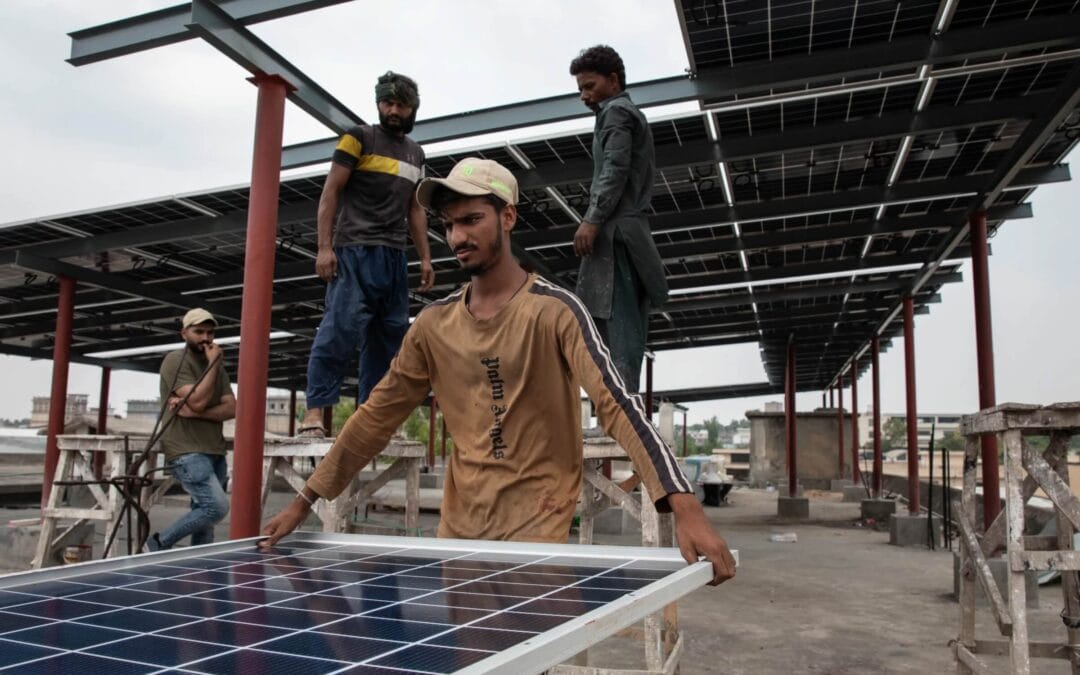
In many countries across the Global South, small solar moves incredibly fast. Because the main power lines are often weak or broken, governments do not try to stop regular citizens from making their own electricity. Small solar setups on homes, farms, and businesses can skip the long lines for government permission and start working in just a few weeks.
3. Cheap Labor and Smart Local Workers
Building solar power takes a lot of hard work. Workers have to prepare the ground, screw down the metal frames, lift the heavy panels, and wire the electronic parts. In the United States, the cost of hiring specialized workers is very high, which makes any solar project expensive to start.
The Global South has a major advantage here: a large supply of affordable and highly skilled local workers.
Also, because the central power grids in countries like Nigeria, India, and Pakistan have suffered from blackouts for years, local communities did not wait for the government to fix it. Over the last twenty years, neighborhood electricians and handy citizens learned how to connect solar systems on their own.
These local workers are already experts at hooking up battery systems, setting up power controllers, and managing small power grids down to the smallest villages. The skilled hands needed to build a clean future are already there on the ground.
4. High Power Bills Create a Big Reason to Change
To understand why small solar is booming in growing economies, you have to look at the "energy burden." This is the percentage of a family's income that goes entirely toward paying for electricity.
In the United States, the average home power bill is only about 2% to 4% of a family's monthly income. Even if prices go up, it rarely changes how people live. But in the Global South, broken or expensive state grids cost a painful amount of money—frequently taking up 15% to 25% or more of what a family earns.
Look at what happened recently in Pakistan. The price of coal went up, and the government raised power bill rates to very high levels. Instead of paying the high bills, regular citizens and small business owners did something amazing: they quit the main power grid. They bought and installed over 51.5 gigawatts of solar panels on their own roofs. When the power companies tried to stop them, citizens just bought local lithium batteries so they could store their own power and walk away from the government grid completely.
In Nigeria, where the main power grid breaks down constantly, small solar allows businesses to turn off noisy, polluting diesel generators. Quitting a broken grid saves money instantly because families do not have to buy expensive fuel.
The Energy Burden & Money Saved
| Country or Region | Power Grid Costs | Cost as % of Family Income | What Happens with Solar Savings? |
| United States | ~$0.16–0.18 per kWh | ~2% – 4% | Money saved is small; big power companies keep the profits. |
| Pakistan | Prices jumped very high | ~15% – 25%+ | Huge change. Money goes directly to family survival: food, medicine, and schools. |
| Nigeria | Unreliable power grids | ~20%+ (including diesel) | Stops dirty diesel smoke; helps fund local shops and food storage. |
5. Keeping Profits Local vs. Giving Money to Big Corporations
The real difference between giant solar farms and small home solar isn't just about technology—it is about who gets the money.
When a giant solar farm is built in the United States, it is owned by massive corporations or the same rich monopolies that made money off fossil fuels for decades. The power plant is centralized, and the profits flow right back to the corporate bosses. Regular people still have to pay a mandatory monthly bill forever.
In the Global South, small solar gives power back to the people. When a family, a farming group, or a neighborhood clinic installs its own solar panels, they stop losing money to a broken power company or an international oil seller.
The money saved from those erased bills stays inside the community. Families instantly use that cash for better food, doctor visits, small business ideas, and school books. Plus, this clean energy can be used to charge electric scooters and small delivery vehicles without relying on dirty coal power.
Conclusion: A New Focus for Clean Energy
The world needs to change how it thinks about climate funding. For too long, big international banks and charities have treated the Global South as an afterthought—a place to buy cheap carbon credits or hand out slow government loans.
If we want to stop global pollution fast, we must look to the Global South as the leaders of the clean energy transition. By investing in small, local solar power, we can cut emissions much faster than we can through slow Western corporate channels. At Novadaur, we believe that helping local communities create and control their own clean power is the quickest path to a safer planet and a wealthier, freer life for everyone.